Powered by Blogger.

Entries

Social Links and Banner Link


Wine to me is passion. It's family and friends. It's warmth of heart and generosity of spirit. Wine is art. It's culture. It's the essence of civilization and the art of living. - Robert Mondavi
Showing posts with label SonomaWineries. Show all posts

Three Sticks Winery serves up the perfect trifecta: Pinot Noir, Chardonnay, Cabernet


The Experience: Fans of historic Sonoma, Ken Fulk, silky Chards, Cabs and Pinot will delight at the charming, intimate experience offered at Three Sticks Winery. Don’t expect to find a flashy tasting room bar crowded with tourists here. Instead, tastings of the boutique winery are conducted at The Adobe directly off Sonoma Square next to a perennial favorite, El Dorado Kitchen.  The Adobe is easy to miss as you drive past, but once inside, it’s as unforgettable as the wines are delectable.  Renovated by acclaimed interior designer, Ken Fulk, the unique site blends historic artifacts with country-chic decor. The details are everywhere - note the imported Italian chandelier here, a French lantern there, the three sticks logo worked into cowboy-boot print furniture so seamlessly you wouldn’t notice unless pointed out. An integral part of the tasting experience is the tour of the Adobe - with a glass of the bold “Castanada” red Rhone blend in hand - an informative, educational and interesting prelude to the luxe wines to follow.  The abode is humble, yet expertly appointed, consisting of a sitting room, dining room, kitchen and bathroom plus the a beautifully maintained garden for tasting alfresco the warmer season.  A renovated barn near the garden provides a luxuriously private ambiance fit for dining and celebrations.  


After our tour of the property, we were seated to a private tasting at the dining room where the wines had been properly decanted in advance and were also treated to a picturesque display of gourmet snacks and charcuterie which beautifully accompanied the wines.  The leisurely tasting was intimate, the wines exceptional, creating a great balance between rarefied and casual.


The Team:  
“Three Sticks” refers to the three Roman numerals that follow Founder and Principal Bill Price’s written name. He grew up and attended high school in Hawaii where his surfer friends gave him the lasting nickname. Though Bill started as a businessman, spending about 30 years in corporate board rooms, he eventually traded in his successful business career for the life of farming, believing in the importance of leaving the world a better place for generations to come.  Winemaker emeritus, Don Van Staaveren was initially enlisted in the project in 2004. Well-respected in the industry, having been in vineyard management since 1970, Don was chief winemaker and Vice President at Chateau St. Jean and accumulated 36 years of experience making wine, in particular Chardonnay and Pinot Noir from Sonoma County before helping start Three Sticks Wine program.  Director of Winemaking, Bob Cabral, has decades of experience making wine in Sonoma County and some feel his name is synonymous with great Pinot Noir. Bob’s passion, experience and following for his work with the varietal is second to none.  He’s held roles as associate winemaker at DeLoach Vineyards, custom crush winemaker at Kunde Family Estate, winemaker at Alderbrook Vineyards and winemaker at Hartford Court Winery before taking his seminal position at Williams Selyem.  Bob’s winemaking philosophy has always been to source and farm the best fruit possible, with minimal intervention in the cellar. He was awarded the 2011 Wine Star Award from the Wine Enthusiast as “Winemaker of the Year.”  


The Wines: Three Sticks Wines is one of the few wineries in California succeeding with the trifecta of popular varietals: Pinot Noir, Cabernet Sauvignon and Chardonnay. The high quality of Three Sticks wines can be attributed to the relatively old vine vineyards farmed by an experienced vineyard manager, the consulting from a veteran winemaker, and Price’s expert management due to experience in the wine business. The first barrel of wine was made by Bill in 2002 before he hired on Don who produced the first commercial wines in 2005. Three Sticks has a natural pedigree from the famed Durell Vineyard from which grapes for some of its Chard and Pinot are harvested. The Durell Vineyard sits on 200 acres of land that overlaps both the Sonoma Coast and the Carneros AVA, and has been producing top quality Chardonnay and Pinot Noir for almost 20 years. The grapes have been and continue to be sold to many top producers including Kistler, winemaker of one of California's most sought-after Chardonnays.  Three Sticks is a small production winery that produces a couple hundred cases of Pinot, and about twice as much Chardonnay, all from the Durell Vineyard, as well as a Cabernet from grapes sourced from Moon Mountain.


The Credo: The past influences the present - fuse the two to create an inviting space for guests to linger and relish the wines while embracing Sonoma’s rich history. This credo was brought to life by the incredibly talented Ken Fulk, a designer internationally known for creating one-of-a-kind living spaces that marry the past and the present. Ken’s eclectic style coupled with The Adobe’s rich history create a gorgeous juxtaposition that enthrall visitors with a historic vibe while making them feel welcome and free to linger and enjoy the plush, inviting spaces. Landscape Architect Penney Magrane has also managed to combine past with present when redesigning the Adobe’s exterior. She incorporated modern, artful notes while preserving many of the historical plantings and even incorporating design elements from the original Helen Van Pelt garden design.  


Unique Offering: The home of Three Sticks Tasting Room is The Adobe, the longest occupied residence in Sonoma and one of the town’s few remaining buildings from California’s Mexican Period. It was built in 1852 by Native Americans but went through a number of owners in its first 100 years.  After purchasing it 170 years after it was constructed, owners Bill and Eva Price gathered a team of local architects, contractors and archaeologists to carefully preserve The Adobe’s integrity and protect the aspects that held the most historic significance. During restoration, a refuse site dating back to circa 1860 was unearthed. Sonoma’s City Historian, George McKale, oversaw the archaeological excavation of the site while Three Sticks staff sifted through all the dirt, rocks and clods  - many of their finds are now on display at The Adobe for guests to see and even feel for themselves.


Visit Details:
All tastings are available by appointment only, Mon - Sat. 10:30am, 1:00pm, and 3:30pm. 
Tastings last between 60 -120 minutes depending on whether dining options are included.
Four-wine Current Release Tasting - $35 per person
Seven-wine Current Release & Library Tasting - $70 per person. Limit is 8 people per group tasting.


Dining Options: All food is prepared by El Dorado Kitchen.
Five wines paired to perfection with chef’s seasonal selections - $85 per person
Private Luncheon: Three-course meal with Three Sticks wine pairings - $200 per person
To book, contact Three Sticks at concierge@threestickswines.com or (707) 996-3328

Tasting Notes:

2013 Durell Vineyard ORIGIN Chardonnay - Durell Estate Vineyard $48


This austere wine is fermented in a concrete egg for 28 days and aged 12 months in small stainless steel barrels, this wine reveals the distinct characteristics of Durell Estate Vineyard. The wine’s richness is surprising for an unoaked Chardonnay, and also bursts with tropical fruit, honeyed lemon, peach and honeysuckle. High acidity adds balance and gives the wine mouthwatering tartness.


2013 Durell Vineyard Pinot Noir - Sonoma Coast $65

Fresh blackberry, hints of soft leather and Durell’s signature tea leaf and savory mushroom aromatics, this wine captures your attention right away. This Pinot shows off its wonderful intricacy via layers of dark cherry and earth embodying Sonoma Coast’s unique terroir.


2011 Moon Mountain District Cabernet Sauvignon - Moon Mountain District $75

Rich and aromatic, this sleek Cabernet shows tiers of blue fruit, berries and dusty deep rose. Upon entry, juicy dark cherry and sweet oaky spice predominate. Round tannins and a plush structure elevate the lengthy finish on this rich mountain Cabernet.

Read more »

Ceja - an “Outlier” Mexican American Winery that will make you feel like family


In Malcolm Gladwell’s famous book, “Outliers,” he repeatedly mentions the "10,000-Hour Rule", claiming that the key to success in any field is, to a large extent, a matter of practicing a specific task for a total of around 10,000 hours. In Napa, over 40% of the population is Hispanic and virtually no wine has been untouched by Hispanic migrant workers hands at some point in the winemaking process (fact: around 68% of U.S. hired crop farm workers were born in Mexico, according to the U.S. Department of Agriculture). Thus, it should come as no surprise that Mexican vintners and winery owners are on the rise, proving that all those hours spent in the vineyard really do build expertise. Among these Mexican American winery owners is the Ceja family, who are not only getting it right, but hitting it out of the ballpark with their wine production, while managing to still create a warm, familial experience for visitors.  With family in mind, we visited owners, Amelia and Pedro Ceja on a lovely Sunday in November to celebrate my father’s birthday, at their Carneros Estate and experienced first hand their wonderful food-friendly wines and top notch hospitality.

The Ceja Estate at at 1016 Las Amigas Road was cozy and welcoming; as the sun was setting over the vineyard at our arrival, the experience was akin to arriving at a family home for Sunday supper.  Amelia Ceja had offered to host us at the alternative new tasting salon at 22989 Burndale Road, Sonoma, as there was construction starting for a new larger winery at the Carneros Estate. I had, however, heard great things about Amelia’s famed organic garden (fact: she’s a certified Master Gardener) and thought that for my father’s birthday visit, the intimate location and “international Ceja headquarters” would be more representative of the family-style Ceja experience. Amelia is a petite woman, but her personality is larger than life and as the first Hispanic female president of a winery, she undoubtedly has helped the brand to thrive and expand.  Amelia Ceja’s passion for her garden and love of cooking was even featured in Sunset Magazine in October 2013. This culinary focus directly influence the types of wines the Cejas produce, driven by great acidity and balance that make them so food-friendly.  The new winery being erected will naturally feature a Master Kitchen while the current Estate Winery will be converted into a bed & breakfast, furthering the tradition of food as an integral part in the family’s growing wine and hospitality business.  Amelia is the quintessential hostess and she welcomed us warmly as we sidled up to a tasting bar, not far from the famous dining room table that has hosted many a wine-focused dinner.  


Amelia Moran Ceja came from a town of 250 people near Jalisco at the age of 12, speaking not a word of English.  When not attending school, she worked in the vineyards, alongside her family where she met her future husband, Pedro Ceja.  Education was important to both Amelia and Pedro’s familes, and Amelia Ceja double-majored in history and literature at the University of California, San Diego before marrying Pedro, who became an engineer in Silicon Valley. Armando Ceja, Pedro’s brother, studied winemaking at the University of California, Davis and in 1983, Armando, Amelia and Pedo purchased 15 acres of Carneros vineyards which ignited Ceja winemaking.  The Cejas now own 113 acres of vineyard, and both Amelia and Pedro have been able to dedicate their careers to the winery.


Amelia is not only a talented chef and gardener, but a skilled marketer; she’d successfully woven a beautiful story of her family’s history and their ongoing pursuit of creating beautiful food-friendly wines that pair beautiful with all cuisines, including Mexican flavors. This emphasis on building a great marriage between tradition and innovation has helped Ceja win the honor of “Best Boutique Winery in Napa & Sonoma” by Best of Napa and Sonoma Valleys Magazine, based on its 2008 and 2009.  Amelia was named Business Woman of the Year by the Sacramento Hispanic Chamber of Commerce in 2008, was recently featured on The Today Show, and has posted over 140 videos on YouTube to date. When I asked what she commonly features in her posts, subjects range from her famous cooking to unique food and wine pairings. Ironically though, the most popular posts feature the family cat, Dulce Beso, (which translates to “sweet kiss”), a friendly feline that we met at the tasting bar that evening.  
This same name is given to the late harvest SauvignonBlanc/Semillon wine that is comparable to a Sauternes.  Amelia tells me she made all three of her children sign up for Twitter accounts, which may have influenced her daughter, Dahlia’s path to working for the family winery as their Sales and Marketing Director. According to Dahlia, “technology and social media have been a great way to expand our presence,” referring to the tweeting and blogging she does regularly. Dalia’s growing role in the culinary world is reflected in the expanding presence of food on the winery’s website, www.cejavineyards.com, and on YouTube, where she has started publishing cooking demonstration videos - proving that food and wine pairing remain the focus of the Ceja’s ventures.


The Cejas are savvy when it comes to managing the financial health of their business and they subsidize their Ceja Wine label by selling about 85 - 90% of their grapes to other wineries. They produce approximately 9,000 cases of wine each year of which they primarily distribute direct to the consumer, though they have been know to also distribute to some top tier customers as well, including Morimoto and The President of the United States.  If the Cejas used all of the grapes they produce, they could easily make 75,000 cases, but they prefer to stay a boutique winery and have the ability to dedicate time and care into every bottle.  Many minority wineries are developing their own style and for the Cejas, the focus centers around family and taking wine to a new level which involves promoting awareness of authentic Mexican cuisine and its fresh flavors; the perfect companion for pairings that yield an ideal wine experience.


We tasted through a full line up of Ceja wines which included a Sauvignon Blanc, Chardonnay, Pinot Noir, Merlot, Syrah, Red Vino De Casa and Cabernet.  Before we could depart, Pedro walked in from outdoors where he’d been surveying the progress of the new winery construction, initiating another round of tasting!  Amelia brought out an assortment of nuts and fresh persimmons from her garden to pair with the famous “Dulce Beso” late harvest dessert wine, and a red dessert wine similar to a port. A Cabernet infused chocolate sauce was a special treat that paired sinfully with the Ceja Cabernet.  Reminiscing and bantering like family, a story came up from my own wedding in which I’d asked my father to saber champagne at the reception. At that, Amelia declared we’d need to open a bottle of the Cejas very own late disgorged sparkling wine! It was the perfect festive finish to my father’s birthday tasting - a gem of a winery not to be missed and an experience not to be rushed.


Tasting Notes (from Ceja):


2012 Sonoma Coast Sauvignon Blanc: $22 per bottle
Aromas of lemon-lime and citrus give way to grapefruit. The palate showcases bright mineral flavors layered with vanilla.


2012 Napa Carneros Chardonnay: $36 per bottle
Aromas of lively citrus, green apple, plump pear and honeysuckle. The palate is fresh, crisp and tangy. Extended sur lie aging provides rich and creamy qualities.


2010 Carneros Pinot Noir: $42 per bottle
The aromas are fresh and floral with red plum, black cherry blossoms and hibiscus scents. The palate showcases a savory medley of Jamaica tea, dried berry, herb and spice flavors. This is a bright, crisp and balanced Pinot Noir with soft tannins and layers of textures.


2009 Sonoma Coast Pinot Noir: $50 per bottle
Aromas of wild berry, pretty plum, cola and earthy raspberry. The palate is smooth and richly flavored with a mix of savory dark berry, blackberry, mineral and sage flavors.


2009 Cabernet Sauvignon: $50 per bottle
Aromas of black cherry, dark chocolate, wild berry, plum and spicy anise. This is a classic Napa Valley Cabernet showcasing depth and well-structured tannins.


20010 Sonoma Carneros Merlot: $38 per bottle
Aromas of raspberries, chocolate spice, red currant and black fruit. The soft and supple tannins complement the long extended flavors.


1999 Dulce Amor Red Dessert Wine: $75 per bottle
A powerful yet silky wine, full of dark tannins, ripe fruit and rich texture. The palate showcases dried fruit characteristics of fig and raisin plus caramel and toffee.


2008 Napa Valley Dulce Beso: $40 per bottle
This wine has richness with an opulent concentration of white peach, vanilla, tropical essences and citrus accents.
Read more »

Hamel Family - The hottest new wine family since the Mondavi’s


Have you ever tried to dress casual chic only to find that it’s a lot more difficult than putting on a formal suit or dress? It may be because it’s hard to find just the right balance between comfortable and elegant, chic and unpretentious. Hamel Family Wines has perfected this art like no other winery in Sonoma, somehow managing to make you feel like you’ve been invited to someone’s warm, private residence, but leaving you with such an elevated experience that you realize a large amount of thought and care went into every detail that made you feel just that comfortable.  Hamel’s limited production premium wines are fantastic and keep getting better; no surprise given the Hamel Ranch location at 15401 Sonoma Highway, nestled at the base of the beautiful Mayacamas Mountain range in the region that is known for producing the most coveted Sonoma Valley blends. The property was acquired by the family, George, Jr. and Pam Hamel and their sons, George III and John Hamel in 2010, but the property had a history of being family owned for over 100 years (the Hearst family was a previous owner).  This family element is a common theme in the Hamels’ vision of creating a winery that is like a  home to its loyal customers and treasured guests.

The wines (Sauvignon Blanc, Rose (made from Syrah, Grenache and Mourvedre), Zinfandel and a Bordeaux style Cabernet blend) are all high quality and beautiful wines, but they share the spotlight with the winery’s brand itself, elevated by the all-star team that reads like a who’s who of the industry’s finest. This includes consulting winemaker, Martha McClellan, whose credits include some of THE top tier Napa Valley cult wineries, Harlan Estate, Sloan Estate and Checkerboard Vineyards; organic viticulturist Phil Coturri, famed design genius, Ken Fulk, who manages branding and lifestyle events, which have included campfire concerts, an outdoor movie series, and vineyard dinners catered by Gary Danko. When it comes to hospitality, the Hamels have definitely invested in adding extra touches of luxury. George III (aka GIII) couldn’t rave more about Hamels’ hospitality director, Dawn Agnew, who was previously maitre d' at Gary Danko's. Dawn’s responsible for many of the personalized touches at Hamel, which include pashminas for visitors on chilly days and badger-shaped door mats let outside your car door to prevent any mud from getting inside when you depart.  The winery and estate were designed by Gould Evans, an award-winning architecture firm whose principals and associates are united around a common vision: to create environments that transform their surroundings, engage their occupants, and sustain their environment. This ethos shines through at every touchpoint. While the estate and winery are breathtaking, they are not ostentatious and blend in elegantly with the natural beauty of Sonoma Valley. Entering the winery, floor to ceiling glass draws all attention to the surrounding picturesque landscape. The color palette is muted and there are clean, modern lines to showcase the expansive views of the surrounding vineyards.  The walls lack expensive artwork, but the property's natural beauty captures your focus.


The interior design by Angela Free, is equally thoughtful, with detail that includes a variety of natural and reclaimed materials.  The rammed-earth wall that spans the length of the 6,875 Estate House was made from excavated earth from the development of the winery. The Hamel Family made sure that virtually nothing was carted away from the property and everything was put to use in some way.  The 12,000 sq. ft caves are made from excavated Monterey Riverbed and house 3 state of the art concrete eggs that are both decorative and functional. While they’ll be used for Sauvignon Blanc, they currently sit dramatically in front of 3 exposed earth walls that showcases the different the layers of terror that while made naturally, could easily have been mistaken for modern art. Personal touches abound, from the stately round dark wood table in the Winery’s Reserve room, sourced to resemble the family’s own dining room table, to the chandeliers in the Library that are made with differently shaped crystals, each piece of which is magnetically attached to the circular metal frames so that they can be adjusted if the “energy” of the room needs to be tweaked.
We visited Hamel Family twice - once on the official opening and again for a special visit for my father’s birthday. The first event was over the top fun with a “Camp Hamel” theme that carried through the event from the staff uniforms (that looked like girl and boy scouts), to the catered food selections (which included a tent for charcuterie and Zinfandel, a make your own trail mix bar, Delfina Pizza truck paired with Girl and the fig offerings, and much more) to the decor (With Ken Fulk’s team managing, it was perfection).  The second visit was intimate and charming. Tastings are scheduled by appointment only and though the property is large enough to host sizable events, as a rule they host only up to 4 parties at a time so that every guest gets a premium experience.  Every tasting is led by a personal ambassador and everything you could imagine wanting in a tasting has been anticipated. We were fortunate enough to enjoy a tour of the winery and caves with George Hamel III who is personable and jovial as he led us through the inner workings of the winery and provided some fun anecdotes. One thing is clear - this family is serious about hospitality and quality, but never lose sight of being playful and clearly enjoy what they are doing. 

They’re in the industry to promote a certain lifestyle experience and build a solid brand rather than to produce vast quantities and make a quick profit. When I inquired about future plans, GIII confirmed that the family winery will remain small production and doesn’t plan to produce more than 6,000 - 7,000 cases annually and these limited production wines will be distributed primarily to the wine club members.  What’s next for the winery? Continuing to build the wine library of vintage wines is in the plans. There is a new floor to ceiling wine cage, inspired by the great houses in Bordeaux, which will eventually hold many verticals of the Hamel wine. A new executive chef program is also in the works - GIII mentioned that the newest team member, Clinton Huntsman, hails from Bouchon restaurant and Calistoga Ranch and will be joining the team to add to the private dining experience at Hamel.  It’s clear that in this spectacular setting, with this armada of artists and gurus, Hamel Family is aligned for continued success.
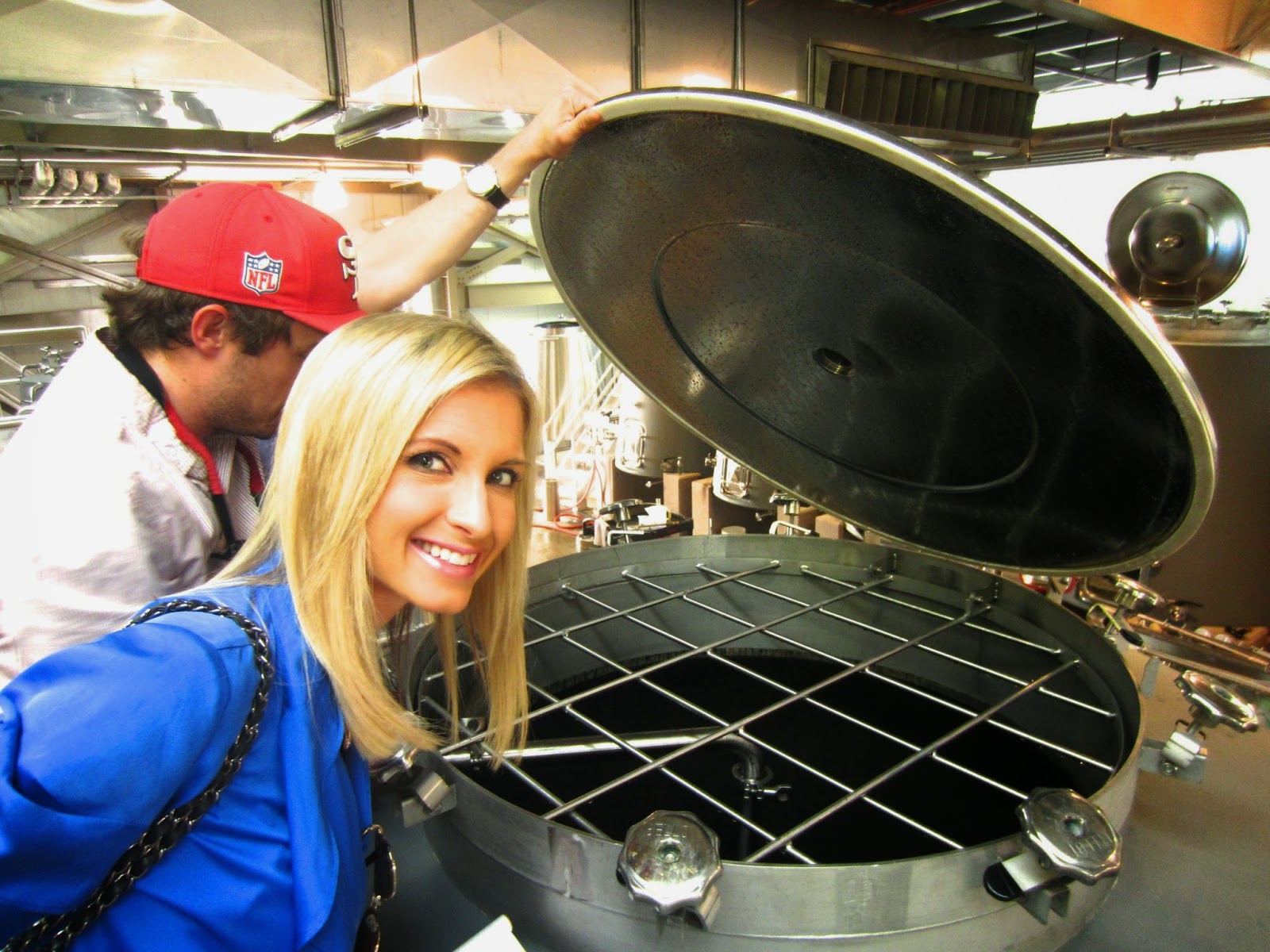
In the winery, we checked out the Hamel’s winemaking in progress as the grapes were still fermenting in the tanks.  Hamel takes a delicate approach to winemaking, carefully sorting grapes and using primarily gravity flow to press the free-run juices.  Three types of vessels are used for winemaking: conical shaped stainless steel tanks, custom made in Burgundy, French Oak barrels made from four different French cooperages, and the concrete eggs. Each vessel adds spice and character to the grape juice that when blended together, making for a magical, well-integrated product.  The grapes themselves are predominantly grown on the Hamel Ranch estate, though they have a second vineyard,Tres Palmas Vineyard, located 7 miles northwest of Hamel Family Ranch in Sonoma Valley. Also in the works is a demo vineyard on the ranch close to the Tasting Center that showcases all the varietals grown on the ranch and will even be made into it’s own special cuvee.


The property is designed so that guests have a variety of tasting options and can select the location that suits their preference. This could be set up on comfortable cushioned chairs outside on the terrace overlooking the vineyards, in the dramatic Reserve Room in the caves, or enjoying a more refined experience in The Library. We were set up to taste in the beautiful library, and the table was set elegantly with pressed linen napkins, beautiful Holmegaard wine glasses, customized tasting menus, and the perfect artisanal charcuterie and cheese board.  Everything was customized to suit our preferences; Our ambassador, Stephen, initiated the tasting by making sure we had selected the music or our preference (jazz), and making sure the temperature was perfect.  The five wines we tasted were all beautiful and we had ample time to savor each before moving on to the next (see tasting notes below).  Even the “spittoons” for unfinished wine were custom sourced from Burgundy. When we reluctantly parted ways, the finishing touches were polished - a sign of true hospitality. Dawn Agnew insisted on making the call to our next winery herself to let them know we’d be slightly tardy (oops - too much fun at Hamel!), and we were sent on our way with artisanal bottled waters and gourmet sea-salt covered chocolate bars. When we reached our car, there was one final surprise, but you’ll have to visit yourself to experience it as well as hear for yourself the great story behind the Hamel Family mascot, the badger. Read more about the Badger or visit yourself: Hamel Family Wines, open 10:00 am - 5:00 pm. 15401 Sonoma Hwy., Sonoma Valley, (707) 996-5800.www.hamelfamilywines.com.

The Wines:


2013 Rose -  $28 per bottle: 519 cases produced.
in the glass, the rose exhibits a copper jewel-toned color, with aromas of ranier cherry, white peach, and strawberry set against a backdrop of fresh flowers and sage.  On the palate, the rose is clean and bright upon entry and smooth and round on the mid-palate and finish.  While retaining its brightness throughout, the carefully selected blend of Grenache, Syrah and Mourvedre, combined with time spent in oak sur lie, lend the wine a full concentration of flavor and a smooth mouth feel.


2013 Sauvignon Blanc - $40 per bottle: 228 cases produced
This golden wheat colored wine displays aromas of bright citrus, lemon brioche, and sliced green apple. Behind the initial fresh fruit characters are tones of flowers, wet stone and sea breeze.  A verve and vibrancy on the palate is balanced by a layered richness and complexity derived in part from the fermentation in French Oak and aging sur lie.  A prominent mineral tone is carried through to a long and rich finish.  


2012 Estate Zinfandel - $45 per bottle: 289 cases produced
This wine has a deep, dark ruby hue in the glass.  The aromatics show dark cherry, a hint of blackberry, and plum framed by floral and spice elements of violets, black peppercorn, anise and nutmeg.  The entry is rich with firm tannins and lush depth bridging the mid-palate and finish. This wine was bottled unfined and unfiltered. While this wine is approachable and powerful while young, it will gain complexity in the months and years to come.


2011 Isthmus - $80 per bottle: 273 cases produced
Deep ruby in its hue, the Isthmus displays pure aromas of dark cherry fruit, plum, and fresh earth, woven in with notes of vanilla, charcoal and lilan.  The brightness and freshness of the fruit carries over onto the palate.  Supple yet balanced, this wine juxtaposes a juice mid-palate with fine tannins and a firm, persistent finish.  Showing accessibility in its youth, this wine’s structure will keep developing over the next 10 years.

2010 Bordeaux Blend “Pamelita Reserve” -  $135 only 11 cases left

Made from 65% Cabernet, then Cabernet Franc, Malbec and Merlot, this wine shows the most complexity and ageability. Aromas of blackberry, red plum and cassis mingle with dark chocolate and baking spice. The palate is inviting and silky, with savory notes of earth and leather balanced by a backbone of acidity and a smooth tannin structure. This wine's layered finish makes it enjoyable now or cellar-worthy for years to come.

Read more »

A Sense of Place


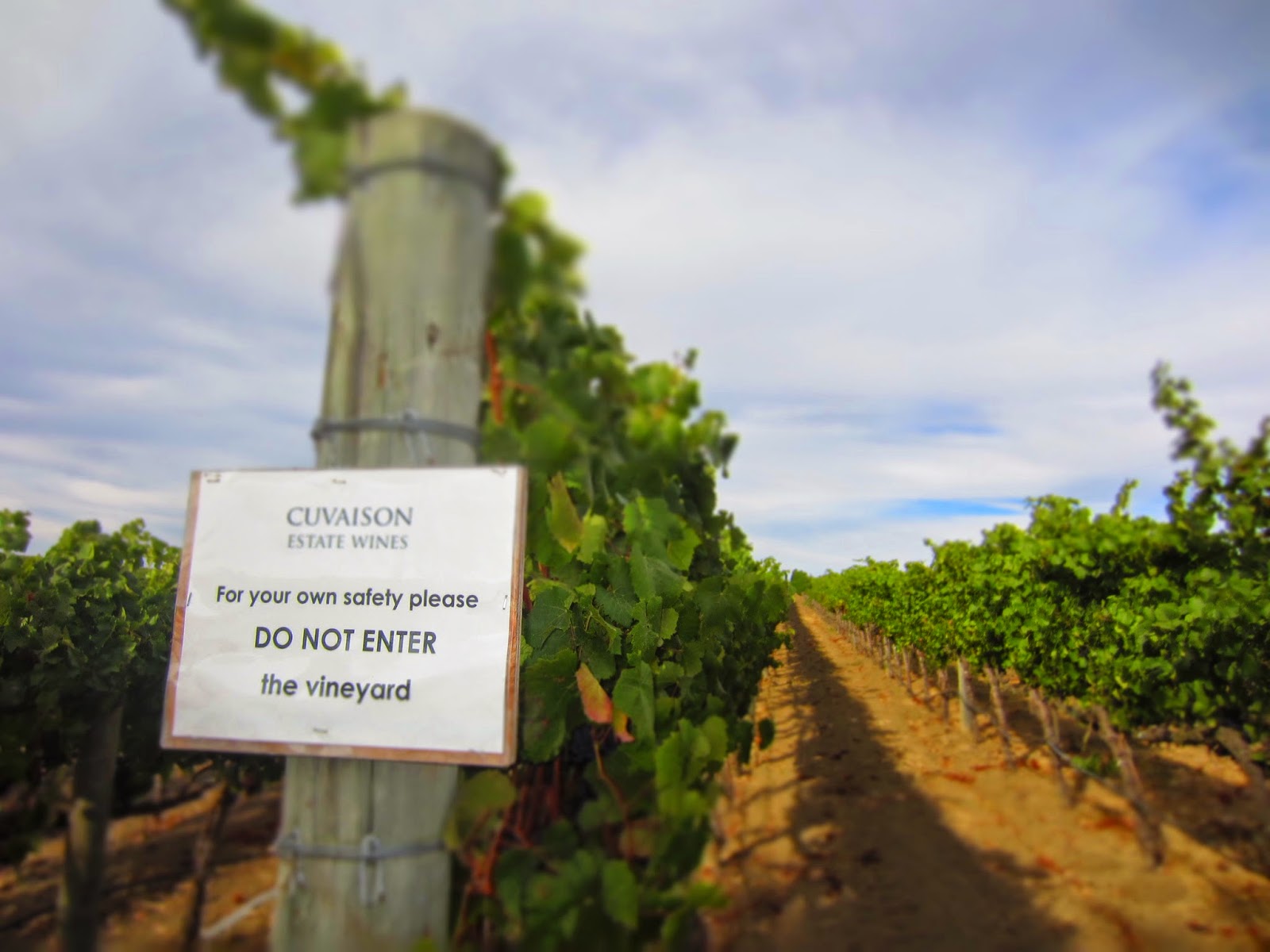
A sense of place. This phrase was echoed  throughout my recent visit to Cuvaison and truly embodies the philosophy behind the winery.  On my first visit, I found myself there at 6:45 am on a Sunday morning in July surrounded by nearly 3,000 other people. A layer of fog kept the temperature cool but the air still, and all of us in racing gear, arms and legs exposed to the cool morning air, were stirring about to stay warm. The grapes, however, were undisturbed. What on earth was I doing at a winery so early in the morning? I was lining up for the best half marathon I have ever experienced, the Napa to Sonoma 13.1 mile race, whose starting line happened to be at Cuvaison.  Cuvaison’s location in Carneros, just a short detour off of Highway 121 had made it a winery on my “must visit” list for a while. So as the gun went off and my fellow racers  and I  ran through beautiful vineyards from Carneros to a finish line in the Sonoma Square, I knew I would return to Cuvaison for a proper tour of the winery, vineyards and taste the impressive portfolio of wines.  A “carrot” always helps with motivation and speed, and racing towards a finish line that promises an impressive line up of wine even helped me to PR!


After enjoying a glass of sparkling wine at the finish line, and the festivities on the square, my husband and I were too exhausted to visit a winery and opted to soak up some the gorgeous Napa sun, poolside. However, I couldn’t keep Cuvaison out of my mind, and we wasted no time, returning the following  weekend for a proper tasting.  The team at Cuvaison, from the winemaker to the hospitality director, to tasting room staff, go above and beyond to create an environment for people to come, relax and enjoy  wines in the same environment that bears the grapes.  Which is certainly striking - rolling vineyard-covered hills, cooled by fog from San Pablo Bay in the Carneros Region of Sonoma. The tasting room is clean, modern, with floor to ceiling glass windows and a viewing deck intended for guests to relax and taste while looking out over a nearby lake and the vineyards; which produce the Pinot Noir and Chardonnay grapes that have made Cuvaison famous.


Dedicated to an ethos of producing vineyard-driven wines, Cuvaison employs block-by-block farming methods and a vineyard-to-bottle winemaking approach. The resulting wines are balanced yet complex, allowing the distinctive characteristics of the estate shine.  For a winery established in 1969, Cuvaison is remarkably ahead of the times with both a modern aesthetic and approach to sustainable winemaking practices. The name, Cuvaison, means that perfect moment when the grapes and yeast  blend together to ferment and produce this perfect liquid, wine.  Winemaker, Steve Rosgard, produces wines that are balanced, nuanced and complex and has established a winemaking technique that involves a very hand-crafted and sustainable approach.  Rogstad harvests grapes block by block ferments them separately to the extent that he even has separate storage rooms set at different temperatures and humidity that are perfectly suited to showcase each particular grape’s terroir and ripeness level in the resulting wine.  Some of the blocks are bottled as single-block Estate wines, but most are blended into beautiful complex yet approachable wines.  Rogstad also employs natural winemaking practices such as using gravity flow, and cement egg fermentation tanks which allow some oxygen to help get into the fermenting wine and create balance.  What you won’t find in any of the Cuvaison wines are overly ripe powerful wines - at Cuvaison, the wines are made to be more austere, embodying Burgundian style elegance.


Not to be overlooked is the profound influence the Schmidheiny family of Switzerland who purchased the winery in 1979. When Thomas Schmidheiny's mother visited the Carneros region in the late 1970's, she was so taken with the land and its potential for winegrowing that she brought a small bag of soil home in her suitcase. A year later, Thomas purchased the Carneros estate where Cuvaison now makes its home. In the years since, the family has thoughtfully re-invested all profits in the vineyard and winery, consistently providing the support needed to produce the highest quality grapes and wines.  Winemaker, Rogstad, joined Cuvaison in 2002, and oversaw the construction of the new winery, ensuring it was "purpose built" to optimally handle the fruit from Cuvaison's estate vineyard.  We toured the winery and barrel room and observed first hand the care that is taken to separate each wine by block and allow it to ferment in perfect conditions. Each vineyard block has a home in a vessel specifically meant for that wine (from French Oak to cement egg to stainless steel), and are designed so they can actually be moved into different environments within the winery as needed to ensure the wine develops perfectly.  The result is high quality wine that is integrated and complex.


Rogstad manages the certified sustainable vineyards at both Cuvaison and Brandlin, Cuvaison’s sister winery, with vineyards on Mt. Veeder, that produces bolder wines like Cabernet and Malbec that require the warmer climate in Napa.  At Cuvaison, you feel a shared pride about the sense of place, as well as a concern about the environment and genuine will to reduce Cuvaison's impact on our environment. A few of the initiatives practiced at Cuvaison include solar power, water conservation and energy efficiency; the winery is also certified Napa Green.  It’s hard to imagine that a winery this dedicated to maintaining the environment also produces
some of the best wines Carneros has to offer and maintains friendly staff to make the experience personal and relaxing.  If you’re looking for the perfect winery to stop at on the way back from Napa, this gem off Duhig Road (neighbor to the stately Domaine Carneros) is ideal.  This isn’t a normal tasting experience with guests overcrowding a tasting bar. It’s recommended to call ahead and schedule an appointment as the tasting room and patio are petite and the experience is tailored to be able to accommodate guests at their own private tables, each with a sweeping view of the picturesque landscape.  You’ll get a tasting of both Cuvaison Pinot and Chardonnay and the wines in the Brandlin portfolio, including an impressive  Zinfandel and Cabernet.


My favorite wines are listed below with tasting notes provided by the winery:


2012 Estate Chardonnay - $25 per bottle
From a truly classic vintage, the 2012 Estate Chardonnay displays lovely aromatics of honeysuckle, lily, acacia blossom and clove spice. Upon tasting this wine, it demonstrates a charming mix of white peach, apricot, nectarine and lime zest all tied to a bright, long, refreshing finish


2012 ATS Chardonnay - $56 per bottle
An opulently styled wine, the 2012 ATS Chardonnay is richly perfumed with notes of honeysuckle, jasmine and orange blossom. The fruit is focused around a lovely core of melon, peach and lemon chiffon with a hint of vanilla and toasted almonds. It’s this interplay between the bright, floral components and the dense fruit with a long crisp finish that sets the ATS apart and pays homage to the art of blending.


2012 Spire Pinot Noir - $48 per bottle
A classic vintage, 2012 enjoyed near perfect weather and ideal conditions at harvest. The Spire Pinot was harvested over a 15 day period, rigorously selecting the best fruit with each pass. The result is a multi-layered wine with opulent fruit, intriguing spice, lush tannins and brilliant acidity. Cherry, plum and wild strawberry notes with rose petal, violet, clove and ginger spice on the nose. Round and full-bodied for Pinot Noir the Spire showcases the plush tannins and rich mouthfeel typical of this site. Aged for 16 months in French oak puncheons, this is a rare wine from a singular place.


2011 Diablo Syrah - $40 per bottle
Named after the formidable Diablo soils from whence this wine springs, this wine is a lover and a fighter, with gorgeous black cherry, boysenberry, sandalwood and cardamom spice notes backed by some bare knuckle tannins. Forged in a cool and challenging vintage on unforgiving soils, this wine demonstrates that the best things are born of struggle. Both powerful and graceful, this wine should reward you with intriguing spice, ample dark fruit and a long, persistent finish.


2012 Brandlin Estate Zinfandel - $38 per bottle

The 2012 Brandlin Zinfandel captures the essence of Old Vine Zin, where delicate floral tones (rose petals) mingle with crushed red berries and dark, jammy plums. The wine also has a nice spice element, star anise and a hint of bay leaf. On the palate the flavors of raspberry, blackcherry and boysenberry jam come to the fore, while texturally the wine is quite lush with medium-bodied tannins and a silky, long, bright finish.

Read more »
 

Copyright © 2010 • Decantress Wine Diary • All rights reserved